
Access Denied
IMPORTANT! If you’re a store owner, please make sure you have Customer accounts enabled in your Store Admin, as you have customer based locks set up with EasyLockdown app. Enable Customer Accounts
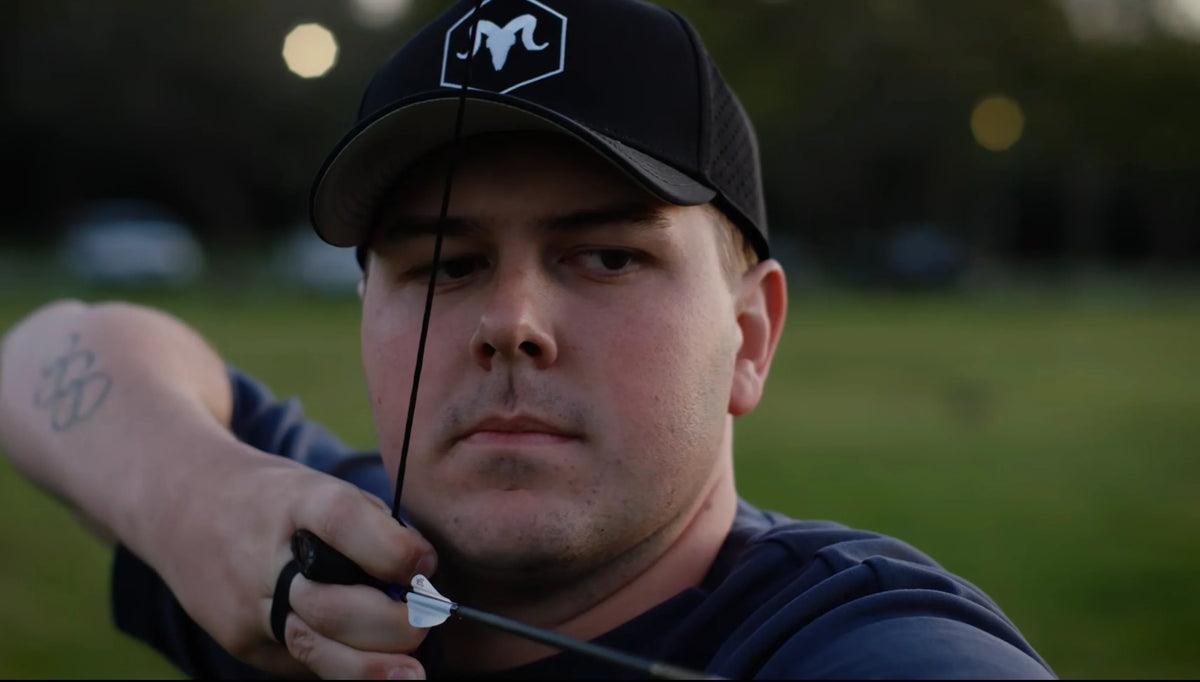
Finding The Best Recurve Bow Sights for Target Archery
A recurve bow sight has one job. Give you an aiming reference you can return to shot after shot, then stay out of the way of your shot process. What decides whether it does that is mechanical, not cosmetic: whether the clicks are repeatable, whether the sight holds up through a season of hard use, whether it is easy to operate under competition conditions, and whether the mount holds its position through a season of travel.
Two sights can look nearly identical and behave completely differently when you are dialing a mark at 70m with the flags standing straight out. This guide breaks down what every part of a recurve sight does, what to evaluate before you spend anything, and how the RamRods SPECTRA is built to perform excellently for you.
The Parts of a Recurve Bow Sight

Image taken from SPECTRA Recurve Sight product manual
A target recurve sight is a modular assembly. It has to stay light, survive the vibration of every shot, and hold a recorded mark without moving. Under World Archery recurve rules the aiming element is a single non-magnified aperture, with no magnifying lens, no level and no string peep, so the whole system is built around one small ring or pin sitting well forward of the riser. Everything else exists to hold that aperture in exactly the same place every time.
-
Mounting bracket, also called the sight block mount. An aluminum plate that bolts to the threaded bushings on the sight side of the riser. It anchors the whole sight to the bow and usually carries a thumb screw so the sight can come off for transport without unbolting the bracket.
-
Extension bar. The horizontal bar, typically 6 to 9 inches, carries the sight forward of the bow. A longer bar increases sight radius, which makes small alignment errors more visible and improves precision. It is also the component most exposed to crosswind, which is why material and profile matter as much as length.
-
Elevation bar, sometimes called the sight track. The vertical rail at the front of the extension bar. The sight block travels up and down it as you change distance, from 18m indoors out to 70m and beyond. It carries the scale you record your marks against.
-
Sight block, also called the carriage. The assembly that slides along the elevation bar and houses the adjustment mechanisms and the aperture rod. Most target blocks include a quick-release so you can move large distances between marks without clicking through every millimeter.
-
Micro-adjustment knobs. Two fine-threaded dials, one for elevation and one for windage. These are what you use to move a group, and their quality is the single biggest difference between sights that look similar. A click has to produce real, repeatable movement at the aperture every time.
-
Aperture and pin assembly. The threaded rod and ring at the end of the sight, and the part you actually aim with. Recurve archers run either an open ring, a fiber optic pin or a dot, locked in position with washers once windage is set.
What Separates a Good Recurve Sight From a Great One
Once you know what each part of a recurve bow sight does, judging a sight comes down to three things:
1. Repeatable, precise adjustment
A sight earns its place on your riser by returning to the same point of impact every time you set a recorded mark. Lead screws develop slack over time, and when they do, a click on the dial no longer produces movement at the aperture. That is where false clicks come from, and it is why archers end up chasing arrows they never actually moved.
What you want is countable, positive clicks in both directions. Test it on the rack if you can: run the windage ten clicks out and ten clicks back, and see whether the aperture returns to where it started. Clean, consistent clicks in both directions are the baseline for any sight worth putting on a competition bow.
2. Bar rigidity and behavior in wind
A stiff sight bar does its most important work after the shot. Every arrow sends vibration through the riser and into the sight assembly. A bar that flexes too much absorbs that energy poorly, which over time works screws loose, wears the precision surfaces of the adjustment mechanism, and creates the kind of cumulative movement that costs you a mark without any single obvious cause. Rigidity limits that excess movement and protects the components that hold your settings.
Wind is the second variable. A flat or boxy bar profile catches crosswind and generates side torque that shows up in the aperture during the hold. On a still indoor line you will never notice it. Shooting a 720 outdoors with the flags out, it is the difference between a hold you can execute through and one you are fighting. Material, profile, and diameter all factor in.
3. Mount fit and holding a mark through travel
Sights get taken off, packed, flown and reassembled. Every one of those cycles is a chance to lose a mark. Two scenarios come up most for archers moving between venues.
The first is staying at a multi-day event. If you are moving from the field to the hotel and back between sessions, you may want to leave your riser assembled rather than touch any sight settings. A sight that lets you remove the aperture independently without disturbing your elevation or windage marks gives you that flexibility.
The second is a full breakdown for travel. When the bow comes apart and the sight goes into a travel case, the benefit you want is the ability to reliably return to the exact same recorded sight marks each time you reassemble. A sight block that mounts and locks consistently, every time, is what makes that possible rather than requiring a re-zero at the range.
Check the hardware regularly regardless of design. A recurve sends real vibration through the riser on every shot, and mounting bolts, the extension lock and the aperture rod all deserve a look before a competition rather than during one.
Choosing the Right Aperture for Your Eye and the Light
Aperture choice is personal. There is no agreed-upon best practice for ring versus pin versus fiber, and anyone telling you otherwise is oversimplifying.
What matters is that your aperture gives you a good circular reference for naturally centering the sight on the target rings. If you shoot with a pin, make sure you can see it clearly under competition lighting conditions, not just at your home range. Visibility requirements shift with venue and time of day. Fewer outdoor archers need a fiber to see their pin adequately; indoors, more athletes find fiber useful when lighting is flat or inconsistent.
Check your aperture setup in conditions that match your next competition as closely as possible. Have a backup plan if the lighting does not cooperate. The aperture is the one part of the sight you actually look at during the shot, and finding out it does not work for the conditions during a ranking round is not the moment for that discovery.
If you are unsure, borrow one of each on the practice line before you buy. Ten ends will tell you more than any spec sheet.
Setting Up and Adjusting a Recurve Sight
The rule for moving a group is follow the arrow. If arrows group right of center, move the windage right. If they group high, move the elevation up. The sight follows the group, not the other way round.
The condition attached to that rule matters more than the rule. Only adjust off an established group. A single arrow outside the group is information about that shot, not about the sight, and moving the sight to chase it will push your next well-executed arrows out the other side. Shoot a controlled group, confirm the pattern repeats, then change one thing.
Record every mark on the elevation scale as you establish it, and confirm your marks in practice before a competition rather than discovering a shift on the line. For diagnosing sight drift, changing groups and balance problems in detail, see our guide to common recurve aiming problems.
How the RamRods SPECTRA Is Built Around These Problems
The SPECTRA Recurve Sight (patent pending) was designed around the three evaluation points above rather than around a feature list. Each element of the design answers a specific thing that goes wrong on the line.
Precise, countable adjustment on every click
Precision-machined micro-click adjustment on both axes, at 0.002 inches (0.05 mm) per click for elevation and 0.0015 inches (0.04 mm) per click for windage. Those increments exist to give you a clear, countable relationship between how many clicks you dial and where the aperture moves. Every click you count is a click that actually happens at the aperture.
The bow mount plate connects directly to the carbon extension bar with a rigid, low-play interface, and the windage rails that connect to the elevation bars are wider than those on comparable sights, which reduces play in all adjustment directions. The SPECTRA has been tested to perform over 100,000 clicks without loss of adjustment performance, which is more than a full-time professional athlete will accumulate in ten years of training and competition.
Wind pushing the aperture off the gold
A 9 inch high-modulus carbon extension bar with a wind-tapered profile, using the same small-diameter, high-stiffness carbon that built the reputation of the RamRods bars in the wind. Less side drag on the bar means less torque fed into the aperture while you are holding.
Post-shot vibration and hardware working loose
VIBRO-Core internal damping is built into the sight bar itself, carried across from the RamRods stabilizer line. Damping at the source protects both the adjustment mechanism and the mounting hardware, since vibration is what walks screws loose over an end. You can read how VIBRO-Core works on the RamRods technology post.
Protecting your marks in transport
The SPECTRA ships with a dedicated travel case. When breaking down the sight for travel, the windage block removes from the elevation bar and stores in the case. When you reassemble at the venue, the block returns to the same recorded position.
For multi-day events, the aperture assembly removes independently without touching elevation or windage settings, giving you a secure option for moving the bow between the field and off it without disturbing the sight.
Here is the SPECTRA Recurve Sight at a glance:
|
Element |
Specification |
|
Extension bar |
9 inch high-modulus carbon, wind-tapered profile |
|
Damping |
VIBRO-Core internal damping within the sight bar |
|
Elevation adjustment |
0.002 in / 0.05 mm per click |
|
Windage adjustment |
0.0015 in / 0.04 mm per click |
|
Windage rail width |
Wider than competing sights for reduced play in all adjustment directions |
|
Click durability |
Tested to 100,000+ clicks without loss of adjustment performance |
|
Aperture block |
Modular, independently removable at events |
|
Aiming element |
Non-magnified aperture, interchangeable (8/32 thread, industry standard) |
|
Built for |
Recurve target, field and 3D recurve |
|
Patent status |
Patent pending |
Frequently Asked Questions
What is the best recurve bow sight for target archery?
The best recurve sight is the one with repeatable, precise adjustment, a rigid extension bar that performs in wind, and a mount that holds its position through travel. The RamRods SPECTRA (patent pending) is built around those variables, with a 9 inch wind-tapered carbon bar, VIBRO-Core internal damping, and a modular aperture block.
What are the parts of a recurve bow sight?
A recurve sight has six main parts: the mounting bracket that bolts to the riser, the extension bar that carries the sight forward, the vertical elevation bar with the scale for your marks, the sight block that slides along it, the elevation and windage micro-adjustment knobs, and the aperture and pin assembly you aim with.
How long should a recurve sight extension bar be?
Most target recurve extension bars run between 6 and 9 inches. A longer bar increases sight radius, which makes small alignment errors easier to see. The trade-off is more exposure to crosswind and more mass forward of the riser, which is why bar stiffness and profile matter as much as the length you choose.
Do recurve bow sights use magnification or a peep sight?
No. Under World Archery recurve rules the sight must use a plain, non-magnified aperture, with no magnifying lens, no level and no string peep. Recurve archers align using a consistent anchor and the blurred string as a rear reference instead. Magnified scopes and peeps belong to the compound target divisions.
How do you adjust a recurve sight to move your group?
Follow the arrow. Move the sight in the same direction as your group: right for a group right of center, up for a group hitting high. Only do it once a group has established a repeatable pattern. Adjusting after a single loose arrow is chasing the arrow and will cost you your baseline.
How often should you check your sight hardware?
Before every competition, and periodically through a heavy practice block. Every shot sends vibration through the riser, and the mounting bolts, extension lock, elevation block and aperture rod can all creep. If a screw keeps loosening, do not simply tighten it harder. Check the threads and mounting surfaces first, and consider a witness mark so movement is easy to spot.
Trust Your Setup When the Score Is on the Line
A recurve sight does its job by being unremarkable. It holds the mark you set, stays steady after the shot, survives the trip, and gives you nothing to worry about while you shoot. Judge your recurve bow sight on click precision, bar rigidity, and mount stability, and ignore everything else.
The RamRods SPECTRA Recurve Sight (patent pending) was engineered around exactly those variables. See the full specification on the product page, or browse the complete RamRods Sights collection to build a setup you can trust under pressure.
October 08, 2026
—
Joshua Smith
Invalid password
Enter